
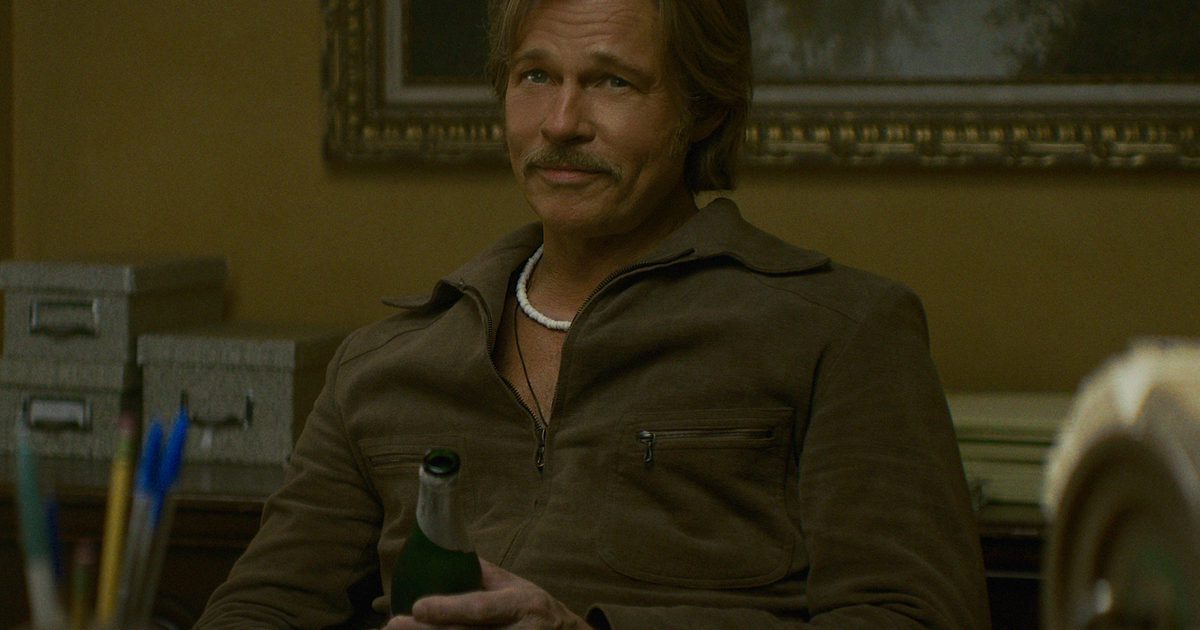
Arguably the most purely pleasurable single scene in the cinema of 2026 features in David Fincher’s barnstorming and insidiously bleakThe Further Mis-Adventures of Cliff Booth. It involves Brad Pitt’s title character, aphotofit paragon of cocksure swagger, turning out cocktails for the patrons of arammed Hollywood Tiki bar. It’s just aguy making some drinks, but it’s completely mesmerising and musical. The framing, the editing, the camera movement… chef’s kiss times three. Fincher clearly gets akick from filming people with innate physical skills, and there are acouple of stylised sporting set pieces here (mud wrestling, tennis, destruction derby, hand-to-hand combat) that he captures with the breathless brio we saw when he concocted the most doom-laden Ivy League rowing contest ever inThe Social Network.
On the surface, this sequence is apiece of fun for fun’s sake, superficially sitting outside the core (albeit, supremely loosey-goosey) narrative. Yet this is afilm in which the colouris the narrative, and all the little esoteric details we learn about the characters and their slightly dead-end lives end up coalescing in the film’s explosive climax. Fincher’s vision, his holistic sense of the film and how all its constituent parts interact with one another, is breathtaking in and of itself. Even more so considering he’s filming ascreenplay by the most obsessively digressive and prolix writer in all of La La Land: Quentin Tarantino.
Get more Little WhiteLies
Anyone who thought that we absolutely did not need aspin-off feature from Tarantino’s ownOnce Upon aTime in Hollywood, this time focusing solely on that film’s most popular character (an acerbic stuntman who may have murdered his wife), could end up eating their words. Yes, the trailers were bad, but it turns out the trailers were wrong. This time around, there’s less insistence on pushing alayer of starry-eyed intellectual profundity regarding cinema’s capacity for reshaping reality to the fore. This is not one of Tarantino’s weird homages to TV’sQuantum Leap where he’s allowed to travel back in time to “fix” history and, as an added extra, bolster his own heroic image. Fincher plays things with astraighter bat, and in doing so manages to marshal much of the typical Tarantino bloat (the term not used entirely in the pejorative) into something that ends up delicately forging aset of human relationships that do really matter. If anything, this feels like Fincher is playing in the gaudy funtime fairground of OUATIH, but he’s actually got Jackie Brown (easily QT’s most mature and cohesive film) on his mind. Cinephile funseekers might even want to chalk this one up as, what if Paul Thomas Anderson made Licorice Pizza and One Battle After Another as onemovie.
It’s 1977 and Cliff’s old pal Rick Dalton has shipped off to Australia to star in TV seriesDingo Dan. Cliff seems content as aservice industry odd-jobber, donning tan driving gloves while making the changeovers in the projection booth of aHollywood fleapit, taking great pleasure reciting the lines from the latest potty-mouthed presentation,Soul Brothers Die Hard. Since all that nasty business with the Manson family, he’s also made aname for himself as aHollywood fixer, helping to cover-up the type of tawdry scandals that would’ve made the pages of Kenneth Anger’s ‘Hollywood Babylon’. He tempers the high-octane aspects of his life by hanging out with his ageing pops (a lovably cantankerous Peter Weller), discussing the finer points of Ralph Meeker’s acting methodology, and has also switched out the attack dog for aprissy little cat. There’s ashort sequence of the pair attentively making an Airfix model together, the tiny plastic elements strewn across atable all ready to form asingle, immaculate machine – aperfect visual metaphor for Fincher’s modus operandi.
One day Cliff receives acall from talent agent Karen Crosby (Elizabeth Debicki) whose client, shortstack TV mainstay and pork-loving jew, Charlie Peters (Scott Caan), has demanded apow-wow. Charlie is illusive about what he actually wants from Cliff, and there’s agood 40minutes of the film where the pair entertainingly case one another out. Eventually, he reveals that he’s gotten into aspot of bother with apair of Filipino brothers who are in town, wearing all-black leathers and busting heads with agiant club hammer that’s so helpful to them that they have named it. Eventually, Cliff agrees to oversee the deal, but only because the brothers have done some things that go beyond what he construes as “the Hollywood way”. Meanwhile, he develops aflirtatious relationship with the perma-exasperated Crosby which reveals fascinating and dark new sides to his character.
Fincher keeps his writing collaborator happy by packing in the pop cultural deviations, one in particular that calls directly back toOnce Upon aTime… is brief but utterly heartbreaking. What elevates the film, however, is Fincher’s recognition of its simple central conceit – awhimsical love story. Cliff’s charm is off the scale, but Karen has dealt with his type before. It’s only when he’s with her that he lets down his guard, revealing his vulnerabilities while also trying to be as chivalrous as possible.
To give Tarantino credit, his screenplay does walk atightrope of empathy when it comes to how much we’re supposed to endear to Cliff, and it almost works despite itself. Tarantino obviously thinks it’s very cool that Cliff was awar hero, but details of his kill count reveal he was closer to ateenage butcher. Plus, his status as alovable ladies man is thrown into relief when he starts telling Karen about some of his dreams – again, it’s hard to know if Tarantino finds that stuff problematic or awesome. All of which is to say, Cliff is more of aslippery fish than he appears, if you choose not to be instantly bewitched by his Fonzie-on-shrooms charms.
All the performers here are supremely on message, and the chemistry is as precise as one of Cliff’s experimental cocktails. It’s perhaps Fincher who’s the big winner, however, his silky direction and sense of screwball pacing just moves this thing along like ajuggernaut. It’ll hopefully offer some serious food for thought in the 2027 Oscar race, but it’s also awildly entertaining crime fantasia from the get-go.